
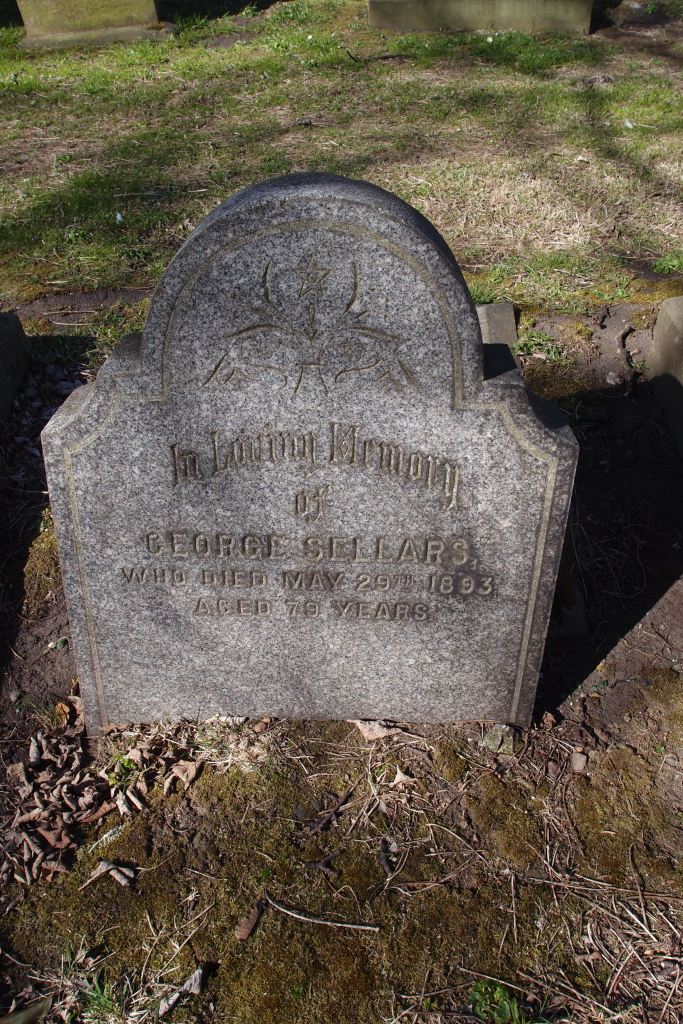
Captain George Sellars, Ships Master.
On the day that England captures Washington and in the midst of a fine Scottish summer, our future Captain and Master of the ship Bombay, George Sellars was born. It was August the 24th, of the year 1814. A few days later on the 28th, as the Library of Congress still smolders, George’s parents John Sellars and Isabella Laing celebrated his arrival with a Christening. His birthplace was near the coastal town of Dundee, his family living on the outskirts just a few miles west, in the Parish of Longforgan. The village which shares its name, sits perched high on a ridge with fine views overlooking the Carse of Gowrie and the Mouth of Tay, that majestic end of Scotland’s largest river, the River Tay. It is said to carry the tears of that ancient mountain Ben Lui, timelessly lamenting the death of the last Queen of Scots, almost to the day a hundred years before George’s birth.
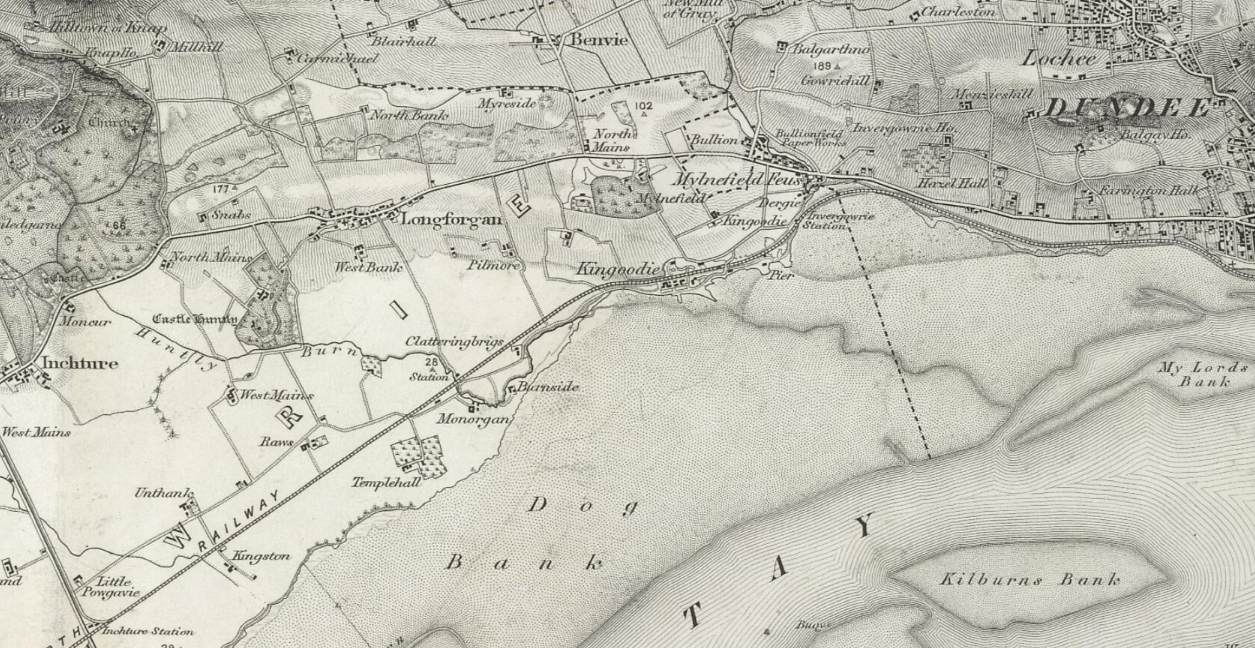
In 1814, Longforgan Parish had a modest population of about 1200. His parents John, born in 1782, and Isabella born 1784 were both local, they married in the village church on a fine autumnal day on the 25th of November 1810. John had followed after his father and worked as a Mason, just as his father, and his father before, until memories and time become fables and folklore. A profession suited to the large hands and strong bodies of the Sellars, physiques and tradition most of John Sellars sons will follow. In 1814 when George entered the world he had two older siblings and in time will have five younger, they are as below.
Janet Sellars. Born on the 2nd of September 1811 in Dundee. Married William Brown on the 11th of November 1832, and had the following known children, Janet, George and James.
John Sellars. Born on the 17th of June 1813 in Longforgan, and died in 1866. In 1851 John was a Mason living at Lower Kingoodie, Longforgan, with his wife Mary Brown, they had married on the 11th of March 1832 in Longforgan, and had the following known children, Jemima Brown, Isabella Laing, James, Ann and Janet.
James Sellars. Born on the 4th of August 1816 in Dundee. Would appear that James followed his elder brother for a life at sea.
Alexander Hean Sellars. Born 10th of August 1818 in Dundee. Would also follow his brother and father becoming a Mason, married a local girl Elisabeth Morris and had the following known children, Charles, Elisabeth, Isabella, Jean, Robert, Sarah and Alexander.
Ann Laing Sellars. Born 5th of November 1820 in Dundee. Married Charles Robertson and had the following known children, Johan, Jean, John, Peter, George and Smith.
Peter Hean Sellars. Born 15th of April 1823 in Longforgan. Became a Mason and married Euphemina Peebles on 24th of November 1844 and had the following known children. Agnes, Euphemina, Margret and Wilhelmina Dawson, Ann Robertson and Peter Hean.
David Hain Sellars. Born 15th of October 1825 in Longforgan. Also became a Mason, married Janet MacNaughton on the 14th of November 1852 and had the following known children, David, Helen, Isabella, George, Adam, Ann, Janet, Jane Watt and Jeanny Robertson.
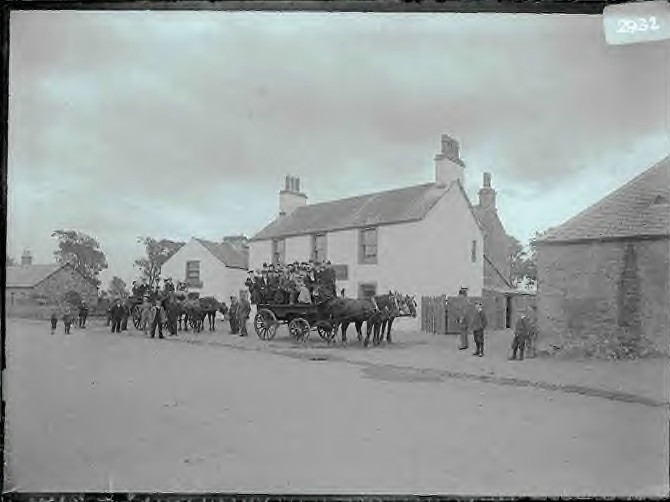
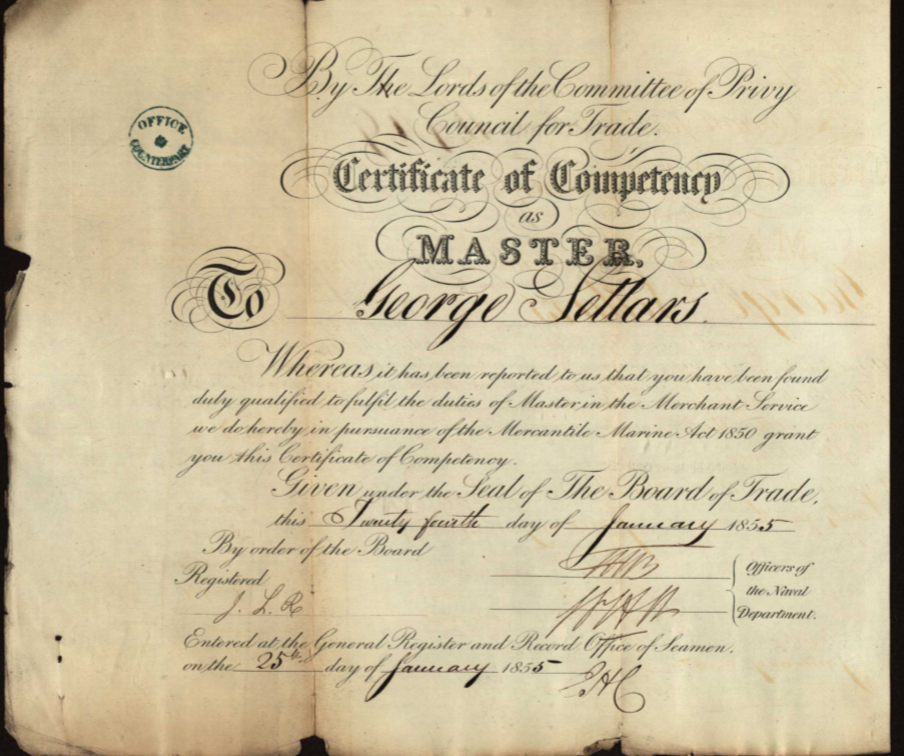
With a honorable family heritage of working as Masons dating back to the construction of the local Huntly Castle, we will never know why George did not follow his fathers and brothers in that ancient tradition of building, instead being seduced by the call of the sea and far horizons and another old profession, that of Mariner. While his brothers constructed houses and homes, George will help build the young nation of New Zealand. He started this journey when as a young lad he made the short trip to Dundee to become a Ships’ Apprentice. Dundee has a rich maritime history and at the time was a major whaling port and had many shipbuilding yards. After five years he moved to Sunderland, which at the time a third of all the ships built in the United Kingdom were from here. In Sunderland, George would over time and gathering experience progressed through the ranks becoming a Able Seaman, Mate and finally Master. Master Certificate 23097.
In 1842, while living in Sunderland, George courted and married the beautiful Sarah Booth. Sarah was born on the 10th December 1816 and Baptised on the 18th of May in 1817 in Monkwearmouth, Durham as a Anglican. Her parents were Ralph Booth and Elisabeth Reed, Sarah came from a Mariner family of Ship Builders and Seaman, and we can only speculate how often she would have worried after and missed her husband, often she must have made the short walk to the Docks, watching as the ships came in, hoping for her husband. In 1851 George and Sarah had there own house and were living at 34 Nile Street, Sunderland with a 18 year old servant girl, Mary Ann Marshall. It is believed they had no known surviving children, although several nephews and close family relatives have taken the name George. At the time of voyage of the Bombay in 1864, Captain Sellars lived not far from London Docks at 22 Bromley Street, which is off Commercial Road, London.
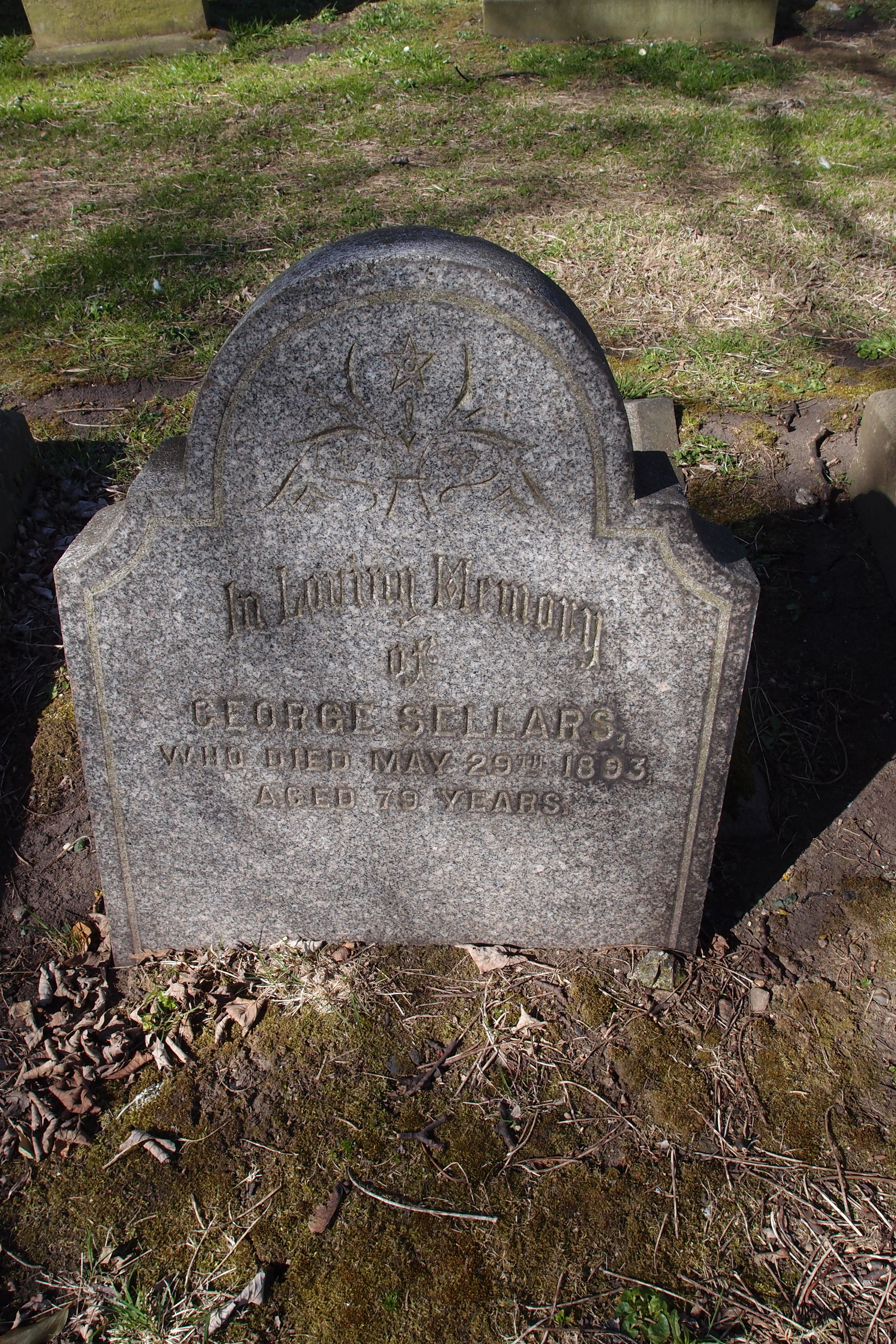
In 1882 Sellars was appointed Ships Husband in London for the ship Zealandia. In the 1891 Census, George was living at 27 Peel Street, Bishopwearmouth, Sunderland, Durham, England, as a widower with his sister-in-law Ann Dagg (Booth) aged 74 years and also a widow, also living at the address was his nephews Samuel and Ralph who were both plumbers and his niece Elizabeth Marshall. George still played a active role in the maritime community, being a member of the Sunderland Society for the Relief of Widows and Orphans of Shipwrecked Mariners and the British Ship-masters and Officers Protection Society. Captain George Sellars died on the 29th of May 1893 aged 79, his wife Sarah had died in 1874 on the 9th of November at a Eden Street Address. On the 20 June to Gowland Bigelon accountant and James Lindsay Superintendent a Registrar of Effects totaling £3910.3s.2d. They are both buried in Bishopwearmouth Cemetery, Sunderland, England.
Voyages Captain Sellars made to New Zealand
1862 The Ship Bombay
Departed London, England on June 17th, 1862, arrived Port Chalmers, Dunedin, New Zealand, on the September 9th, 1862.
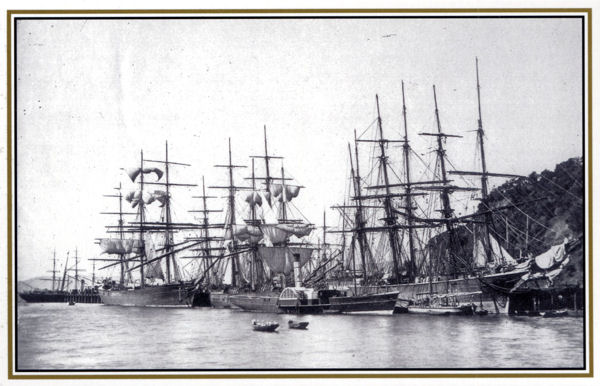
The Bombay had a gross tonnage of 937 tonnes, and was a fully rigged ship with dimensions of 186 feet x 33 ft 4 in x 20 feet. Built in Harwich, England, at the Old Navy Shipyard by Mr Vaux.
The Bombay sailed for Port Chalmers, Dunedin in the South Island of New Zealand with a large cargo of Guinness, Ale, Whiskey, Mustard, Spices, News and other goods for a population swelled from the Otago gold rush and homesick and hungry for the taste of home. The town itself with its strong Celtic influence and robust winters would have felt familiar to the Captain. As well as general cargo, approximately 145 passengers made the long voyage, including Alice Gilchrist, Ann Welsh, Elizabeth Garlick, Lillian and Helen Anderson and Mary and Jessie Reid, who were young ladies on Government assisted passage, looking for work as servants and home help, or to help balance the disparity of the sexes in the fledgling nation and gain a husband. A large number of the passengers were “Non-Conformists”, people that had left the Church of England to become Protestants. Not all held religious virtues, one passenger Mr Ingles a former Cambridge University student, now lawyer, and son of a Gentleman in Helston, Cornwall, had left his betrothed, a daughter of a respectable tradesmen in Cambridge and absconded to Otago with another women who also travelled on the voyage. He will be found guilty in a London Court of Breach of promise to marry and fined £1,000. It is not yet known if the other lady was known to him beforehand. Albert Myers, the ships 17 year old Steward was, on arrival in Port Chalmers, tried and sentenced to hard labour for stealing from several of the ships passengers, being Charles Fox, Joseph Lyle and William Speer. Items taken included a cigar case, studs, buttons, a pin, two pipe cases and a pair of Spurs. The Bombay was of modern construction, and on arrival fellow Mariners were extremely interested in herdesign and modern features, including its anchors. Designed by Ferminand Martin it was a new design that prevented fouling, were easier to stow and much lighter then traditional designs.
The Bombay departed Port Chalmers, New Zealand on the 11th of October 1862 for its return voyage to London, England via Shanghai, China. Its departure was not without incident, while being towed by the Steam Tug Samson from the harbour it hit a sandbank, thankfully no damage occurred however it raised urgent concerns from the local authorities that the harbour needed to be dredged. At the time the harbour was seeing a large amount of traffic due to the Otago gold rush and upgrades were urgently needed.
1863 The Ship Bombay
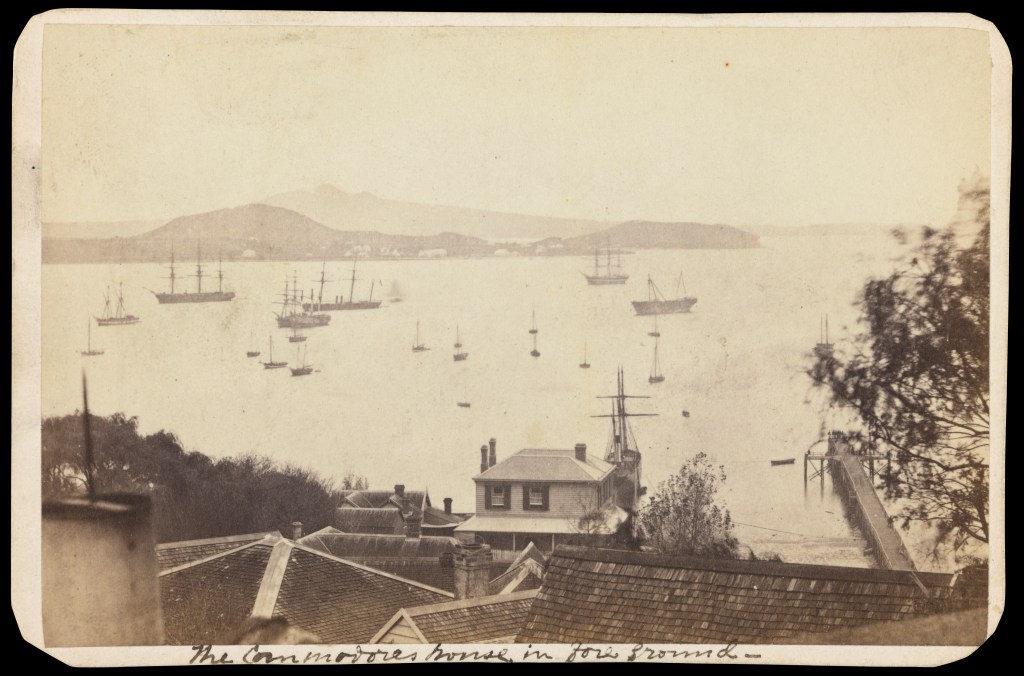
Departed London, England on August 26th, 1863 and arrived in Auckland, New Zealand, on the 8th of December 1863.
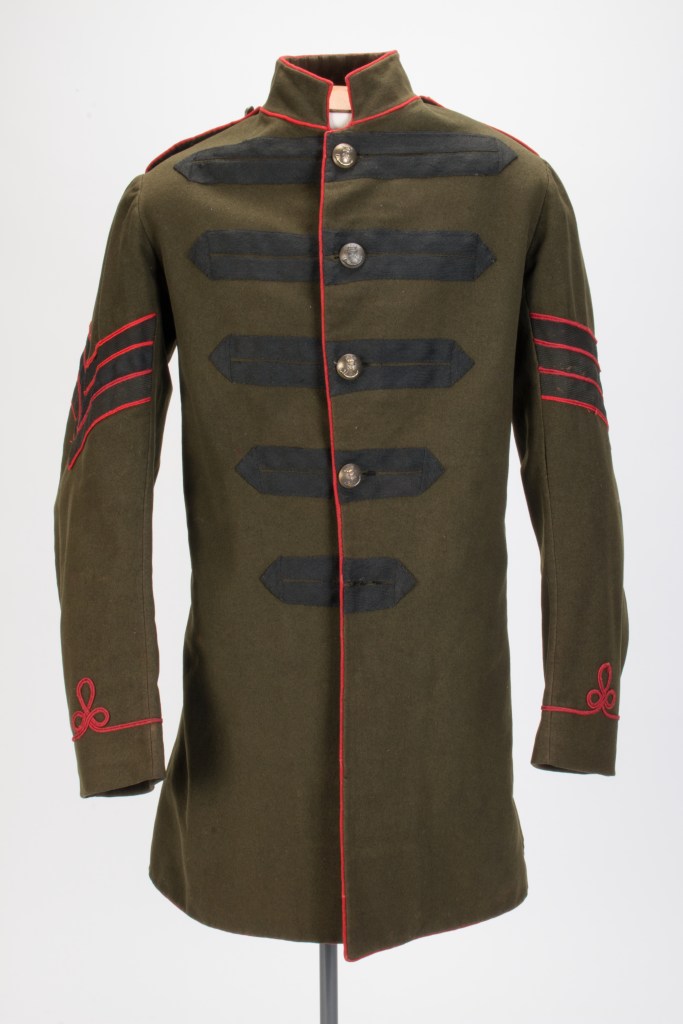
The Bombay made good passage and carried 180 passengers, with only one death reported. Cargo of interest included the uniform’s for the Auckland Militia Volunteers, valued at £4,000, equipment for the Auckland Gas Works, a Silver Cup Trophy for the 1864 Auckland Regatta, and a bust of the Princess of Wales by the renowned artist Mary Thornycroft, presented by the Art Union of London to Mr Leech. John Leech had emigrated to NZ from Manchester and was a Carver and Gilder. He had opened a Art gallery in 1855 and displayed works from renowned artists such as Charles Goldie, Gustavus von Tempsky, Alfred Sharpe and J.B.C. Hoyte. On arrival a number of the Bombay’s crew faced charges in the Auckland Police Court. Seaman William Crosbie and George Watkins were charged with willful disobedience while on the voyage and sentenced to hard labour, another three Seaman John Fredrick, Thomas Hardwick and Edward Oakley were arrested in Port for stealing ship stores and willful disobedience and also sentenced to hard labour, while seaman Thomas Jackson and George Lloyd were charged with desertion after the temptation of staying in New Zealand go the better of them.
The Bombay departed Auckland, New Zealand on the 8th of February, 1864 for London, England. The delay due to a lack of crew and the need for recruitment being required. The Ships destination was listed as Guam, this is a destination used to keep the planned actual voyage a secret. The final destination was finally London, but unknown at this stage via where or with what cargo.
1864 The Ship Bombay
Departed London, England on the 26th of November 1864, arrived Auckland, New Zealand on the 18th of March 1865.
This is the main story and content of this site and the inspiration behind “To Find A Home.”However in brief summary the Bombayleft London with 400 passengers bound for Auckland, New Zealand. Most were emigrants seeking a new life in a far away and exotic land and a good majority were on assisted passage under the New Zealand Government’s Waikato Immigration Scheme. However the ship faced several gales of hurricane proportions in the Southern Ocean, loosing its masts and sails and lucky to be afloat it was eventually rescued and towed into Auckland Harbour by the the Royal Navy Ship HMS Curacoa. HMS Curacoa had departed Auckland on the 17th of March, 1865 bound for Sydney, Australia. On the same day she came across the stricken Bombay and took her under tow, arriving back at Auckland at about 10:00 on the 18th of March, 1865. The Bombay’s surviving passengers and crew were much relieved to be on dry land again. It is of amusement to know that while HMS Curacoa was towing the Bombay, there was wild rumours from the Northland population that it was a Federal Navy ship with a captured Confederate boat, having dueled in a Civil War grand naval battle on the high seas. This was no doubt due to the HMS Curacoa partaking in gun practice and navel maneuvers off the Ninepins in Northland on the afternoon of the 17th. Of interest, our rescuers the HMS Curacoa was launched and built on 13th April 1854 at Pembroke Dockyard, England. The ship was a 31-gun Tribune class ship, however by 1865 her armament was reduced down to 23 guns. She served in the Mediterranean, Black Sea during the Crimean War, then the Channel, North America and West Indies, where Curacoa Island gets its name, finally serving in Australia and New Zealand before being broken up in 1869. During the Waikato War, her company provided reinforcements for the Navel Brigade in Auckland. The Bombay was moved in late March to Mechanics Bay for repairs and refitting, remaining at that location until the 5th of August, 1865. The repairs included new masts, spars, rigging and sails. The work was carried out by Nicol and Sons, at a cost of £3,750. A large Kauri mast came from Whangarei, aboard the ship Ivanhoe, it was 80 feet in height and 28 inches in diameter. The sails were repaired by Mr Malcom for £500.
Departed Auckland, New Zealand in the morning of September the 3rd. 1865 for London, England via India. Finally repaired the Bombay was Charted by the Government at a charge of £22.5 s per head, and refitted as a hospital ship for taking injured military personal from the Waikato War back to England. In total 138 men of NCO and lower ranks from the 12th, 14th, 18th, 40th, 43rd, 50th, 57th, 65th and 70th Regiments were transported. Also on the Bombay were a number of Officers under the command of Major Mould of the Royal Engineers, including Captain Vereker of the 12th Regiment, Lieutenant King of the 50th Regiment, and Lieutenant Clarkson of the 68th Regiment also travelling were 14 women and 23 children who were the wives and children of the senior ranks and several doctors and medical staff.
1866 The Ship Bombay
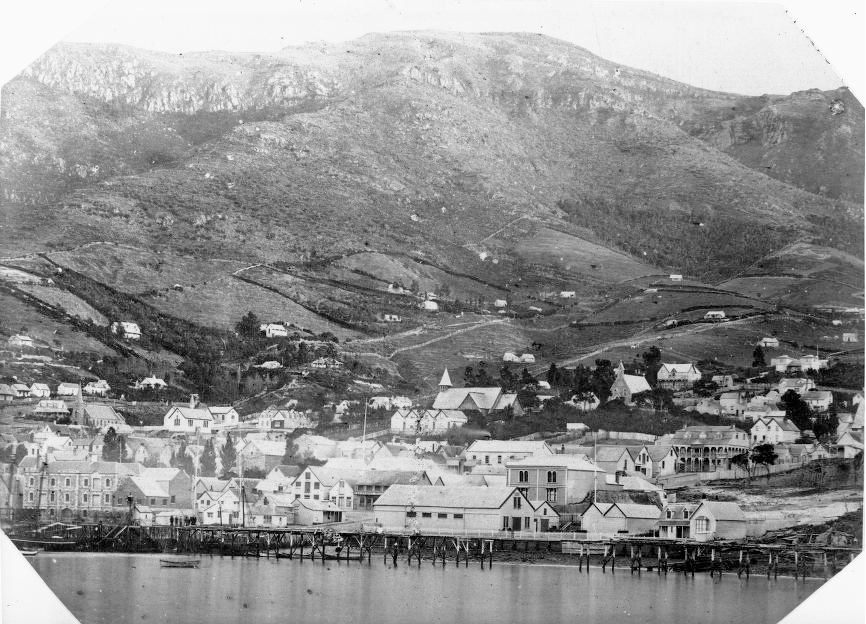
Departed London, England on the 5th of May 1866, arrived Lyttelton, Christchurch, New Zealand on the 18th of August, 1866.
The Bombayagain experienced gales and storms, although not as severe as the previous voyage, and with only one death recorded, a young child named Denton Sydney Smith, soon after leaving London from dysentery. The passengers had nothing but good words to say about the Captain and ship. Passenger numbers were approximately 160 and most of whom were Irish females on assisted passage. The ship also carried a large amount of general cargo. One of the passengers was a young Dairy Maid from County Galway named Ellen Silke. When as a young girl of 12, a man twice her age requested her father to marry her, her father refused but over the years his persistence paid off and her father without her knowledge promised her hand. When she was 19, the man, John Crowe emigrated to New Zealand, and young Ellen was called for, she found herself a year later travelling on the Bombay to be with him, she will go on to marry John and have nine children. Seaman Thomas Stewart, Cornelius Feagan, Cornelius Sheehan and Thomas Freeman were all sentenced to hard labour on charges of being drunk and disorderly, refusing orders and entering the single women’s cabins looking for bread and cheese.
Departed Lyttelton Harbour, Christchurch, New Zealand on the morning of 7th of January 1867 for London, England. The Bombay had stayed in Lyttelton Harbour for several months waiting for the first wool of the season to ship back to England. She loaded over 3050 bales of wool and also several skins leaving no room for passengers.
1868 The Ship Ida Zeigler
Departed on August the 3rd, 1868, from London, England, arrived Auckland, New Zealand on November the 8th, 1868.
A fast ship, the Ida Zeigler made good passage from the East Indian Docks in London to Auckland. Towed from its mooring at 1 pm and embarking at 7 pm from Gravesend it had a uneventful passage, and if it had not encountered light winds before passing the Cape of Good Hope would have completed the run in under 90 days. No deaths occurred and about 60 passengers and general cargo were safely landed, cargo included 600 bags of salt and general stores, mostly goods that a homesick population yearned after, including Mustard, Ham, Stout, Tobacco and Cheese. James Beaston the Boatswain, and Seaman Edward Liemond were charged with threatening language towards officer F M Dicker.
Departed Auckland, New Zealand on the 23rd of December 1868 and sailed to Napier Port, New Zealand, arriving on the 26th of December 1868. The Ida Zeigler stayed in port for a time loading wool bales and a small amount of preserved meat to be sent to England as a experiment for testing the market. On the 27th of February a storm hit the Port and the ship was wrecked. Captain Sellars, with the first and second mates were the last to leave the vessel. At the time of loss the ship was almost fully loaded with only remaining 570 bales of wool still to board and 2500 on board the value lost was about estimated at £22,500. A eyewitness recounted that: Fortunately for the Port of Napier, a black North-Easter such as that which blew during the night of Friday and the morning of Saturday last week is of very rare occurrence, but when it does occur the danger to shipping in the roadstead is imminent. It is true that a substantial mooring have been laid at public cost, but there is a limit to the strength of a cable, and when that breaks on a lee shore the fate of a vessel is sealed. As we intimated, it was during the night that the gale began to arrive at its intensity and the morning showed the Bay a mass of foaming waves, which was breaking high over the Ida Zeigler till about 11 am, when she was observed drifting towards the shore. An attempt appeared to be made by those on board to run her bows on to the beach, but it was not successful. Immediately on striking she turned broadside onto the shore, and being then at the mercy of the waves, it became quite evident that she must speedily break into pieces. During this time the rain was falling heavily, and the surf could be seen from the Spit to be dashing mast high over the doomed vessel as she was rocking from side to side until at length she heeled over onto the beach and became fixed on her broadside. Two boats filled with persons willing to lend assistance were shortly on the scene of the disaster about 3 miles from the Port, their efforts have been successful in saving some portion the wreck and some 150 bales of wool out of about 2500 being saved. During the night of Saturday however the Ida Zeiglerbecame completely broken up and with a change of wind to the south allowing the greater portion both of the wreck and cargo to be driven out into the bay. Captain Sellars testified before leaving New Zealand for the official inquiry led by Justices of the Peace J Smith and H Tiffen, which took place on the 11th March 1869 at the Residents Magistrates Court. His recount was a follows: I Arrived on the 26th of December to fine weather, the Harbour Master come on board a few days later and shifted the ships berthing and were now moored in 6 1/2 fathoms. The Harbour Master advised if it come on to blow to give the ship more cable. The Top-Gallant Mast and Yards were struck and sent on deck, before the Harbour Master came on board. A few days later after the Excelsior left I was moved to the Government Moorings. The first breeze I had after arrival was a South Easter the force was not over 5 but the sea was heavy. I observed breakers at Pania Reef and off the Bluff. I was then informed by the Harbour Master that I was in 5 ½ fathoms at the mooring at low water, but when I checked I found I was at 4 ½ fathoms. The ship was drawing at the time 18 feet fore and aft. Fully laden she would have drawn 3 inches more. It would be impossible to beat out with a gale blowing from seaweed. On coming to the moorings Captain Cellem said the buoy was leaky and had water in it, I unshackled it for him and no other buoy was replaced. My starboard chain was shackled to the Government Chain with a government shackle, I made the remark that it was too wide in the lugs. I came on shore and advised Captain Cellem that the Ship was in 4 ½ Fathoms of water and I did not consider the ship was safe and intended to move her further out to sea when the weather permitted. Owing to the bad weather I did not have a opportunity and I was afraid the ship would strike if weather became worse. When the Gale commenced I was on shore but immediately went on board on a lighter reaching the ship at about 1pm. The wind greatly increased throughout the day and the night. The following morning at about 10:30 during a heavy squall the ship parted from her starboard chain, we immediately veered away from the whole of the port chain. The ship struck heavily aft several times, she then struck heavily again at about noon and parted her port cable, finding it impossible to beat out to sea I gave orders to set Jib, Trysail and Foresail with the intention of running her on shore, my intention to save life and if possible property, she struck the beach at 12:15 where she became a wreck. It was the 27th of February 1869. The official investigation officially attributed blame on the Harbormaster. Although no lives were lost from the Ida Zeigler, a discharged solider from the 65th Regiment, Joseph Robinson drowned while engaged with others in retrieving bales of wool from the rough surf. The thirteen crew of the Ida Zeiglerwere paid off on the 3rd of March, and travelled to Auckland via the SS Wellington. A local James Evans was charged with stealing a case of tobacco that was washed ashore and In 1874 The Ida Zeigler’s Spar was recovered floating near Portland Island, off the coast of Hawkes Bay, New Zealand. Captain Sellars left Napier on the SS Lord Ashleyto start his voyage to London in late March.
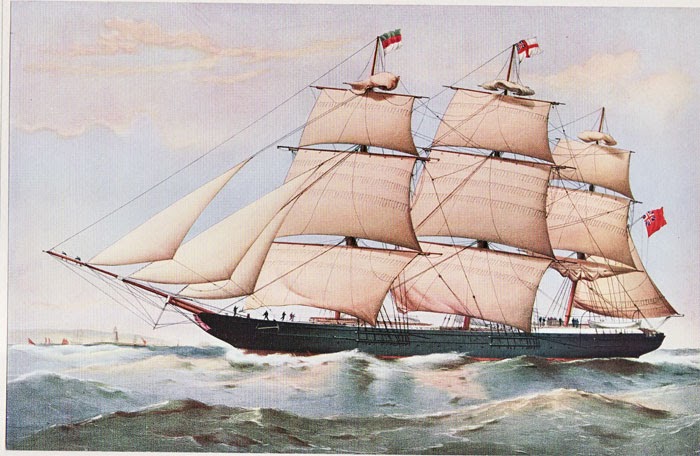
1869 The Ship Electra
Departed London, England on the 9th of July 9th, 1869, arrived Wellington New Zealand in October 11th, 1869.
The Electra was of a gross tonnage of 668 tons. Length 176.4′ x breadth 30.5′ x depth 18′, and she was built by A. HALL & Co., Aberdeen. The Electra sailed without incident, although when in the Indian Ocean at 64 degrees 10 minutes S. and 121 degrees 30 minutes E, the Electra sailed through large icebergs for ninety miles, passing about fifty-three, the largest of which were from one hundred to two hundred feet high and 400 feet wide, one evening no less than thirty icebergs were visible from the mast-head; “in fact,” said Captain Sellers, “Nothing but ice could be seen.” The ship landed a small amount of passengers and a large amount of general cargo which included over 2000 Snider- Enfield Rifles and ammunition for the Government. Fifty of the Rifles and over 20,000 rounds were pressed into service immediately with a detachment of men sent after Te Kooti, the Maori religious leader. A Seaman from the Electra, William Moore was charged with fighting a officer from another ship, and the Chief Officer of the ElectraThomas Irvine was charged with obscene language, both were sentenced to hard labour.
Departed Wellington, New Zealand at 10:00 on the 3rd of February for London, England. The Ship was repainted and loaded with 2940 bales of wool and also tallow, flax, bones, grease and also 3 bales of whale bones
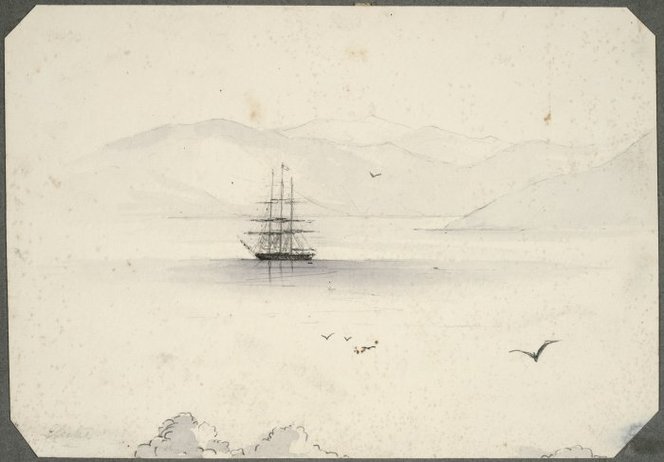
1870 The Ship Electra
Departed London, England on July 17th 1870, arrived Wellington, New Zealand on October 17th 1870.
The voyage was made in good time with 16 passengers and no reported sickness or deaths. General cargo including 4 horse power turbine water wheels, however it was found on arrival that some of the cargo was damaged by seawater. The cook Edward Johnston Partridge was sentenced to hard labour for assaulting the Chief officer, C Palgrave. The Chief officer was later charged himself for beating the Ships boy, a young lad of just sixteen, Henry Cannon. Seaman Walter Woodfield was also charged for refusing duty. The Electra stayed in port for some time, giving Captain Sellars time to take an active part in Wellington affairs. He was elected Director of the Caledonian Society and judge of the Anniversary Regatta. While in harbour rumors circulated that the Electra caught on fire, however it was some rubbish lying between the Electra and the Tararua. On a more serious incident The Ship broke its moorings in a storm due to a broken Ring Bolt, thankfully quick actions and cool heads prevailed and the anchor was dropped quickly and only minor damage was inflicted. Sellars successfully sued the local authorities for £50 over the incident.
Departed Wellington, New Zealand for London, England on the 1st of February 1871. The ship departed with a small amount of passengers and a cargo of flax, tallow and 2600 bales of wool.
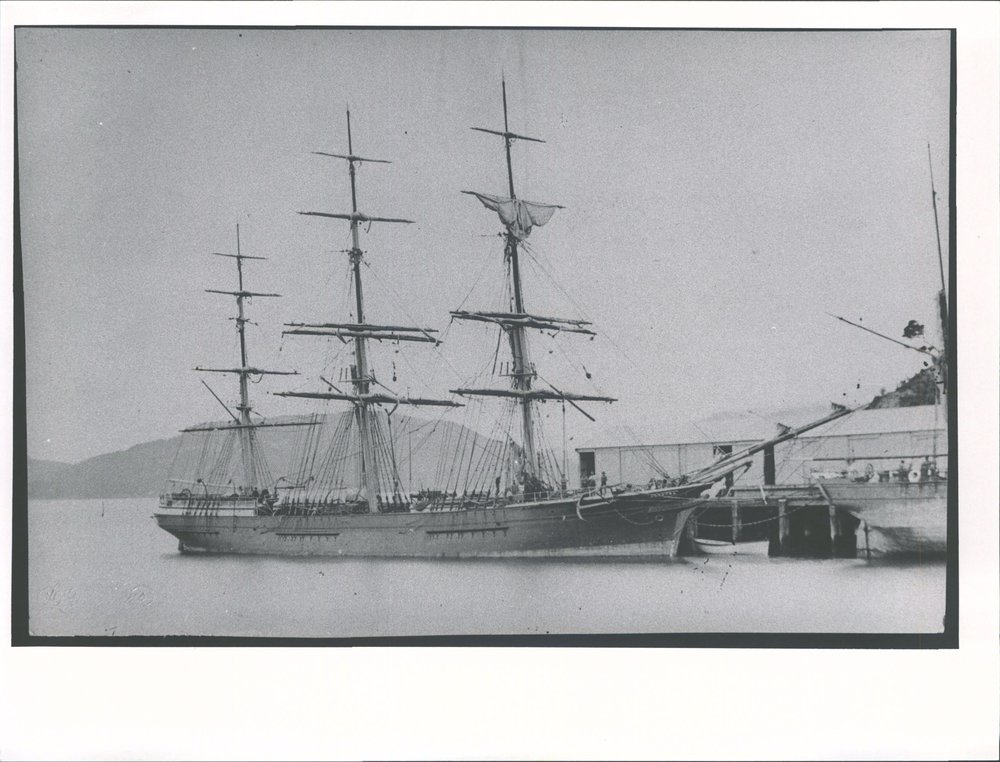
1871 The Ship Electra
Departed London, England on July 12th, 1871, arrived Wellington, New Zealand on October 16th, 1871.
On arriving into Wellington Harbour and in-between Pencarrow Lighthouse and Barrett’s Reef, the Boatswain was knocked overboard by the fore-tack, not able to swim he managed to grab a rope which was thrown to him and saved himself from drowning. Pencarrow Lighthouse was New Zealand first, being put in service on the first of January 1859. Barrett’s Reef is one of New Zealand’s most dangerous reefs, and has been the seen of some of the countries worse disasters at sea, just a few weeks before Electra’s arrival the Schooner Lady Bird had wrecked her itself on the Reef. However the voyage itself was without incident and the shiparrived with a small amount of passengers and general cargo including 1200 cases of Confectionery, 400 cases of Stout, 575 cases of Brandy, 150 casks of Guinness and assorted pianos and furniture. The Government also received 278 barrels of ammunition and 350 rifles. Two sailors were sentenced to hard labour for desertion.
Departed Wellington, New Zealand on the 15th of January 1872 for London, England. TheElectra had loaded over 2834 wool bales, 308 bales flax, tallow and butter, and three passengers, loading was delayed due to her hydraulic press breaking, which compresses the wool bales to allow more to be loaded.
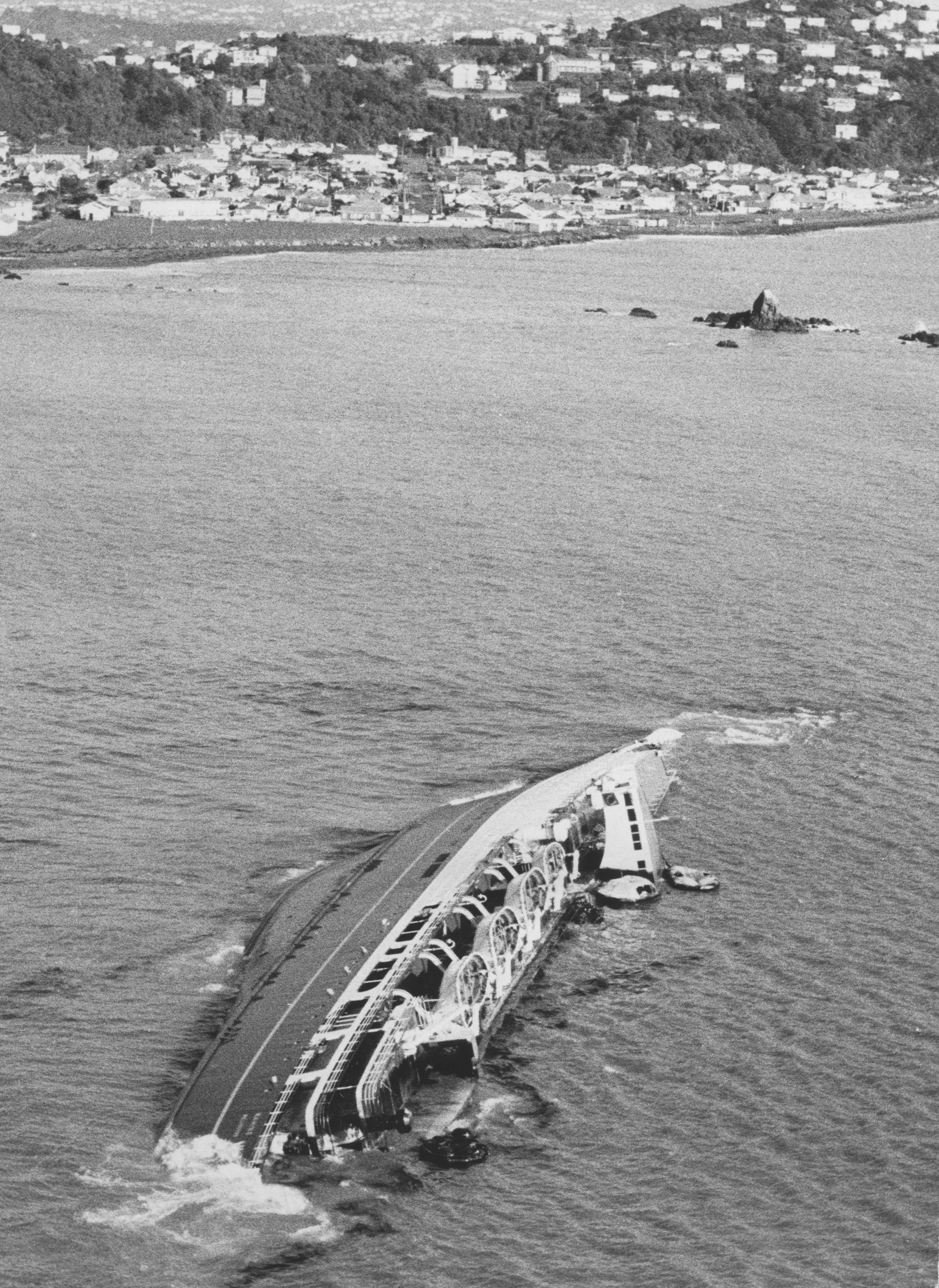
1873 The Ship Electra
Departed London, England on May 25th, 1873, and arrived Wellington, New Zealand on September 1st, 1873.
The ship had a good voyage without incident, and landed a few passengers and general cargo, which included Joys Cigarettes for Asthma and 200 casks of Portland Cement, some of the cargo was damaged from seawater. Also transported were 5 pure breed sheep, 4 Romney Marsh Rams from the flock of Mr H H Rigden of Hythe and a Lincoln Ram bred by Mr Dudding. Captain Sellars presented the Caledonian Society with a imitation Royal Standard of Scotland measuring 12 feet by 40 feet. Captain Sellars was also a expert witness in a court case, The ship William Tapscott was alleged to be not seaworthy by the crew, Sellars examined the ship and testified as a superintendent of seven ships being built and the refitting of many others that he found the ship in good condition. the case was adjourned. William Kent the ships cook was charged with refusing duty, Captain Sellars testified he was a excellent cook at sea but in harbour he refused to cook or allow others to do so, the cook promised to repent and was released.
Departed Wellington, New Zealand for London, England on the 12th of January 1874. Sailed with wool and other cargo valued at over £50,000 and several passengers.
1874 The Ship Zealandia
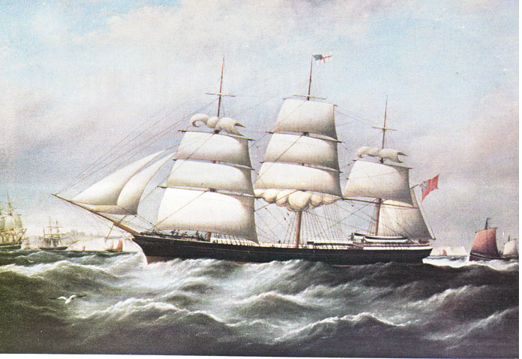
Departed London, England on July 8th 1874, and arrived Auckland, New Zealand on October 15th 1874.
The Zealandia was a full-rigged iron ship built in 1869 by C. Connell & Co., Glasgow, at Yard No. 65. Dimensions: 215’6″×35’1″×20’3″ and tonnage: 1165 GRT, 1116 NRT and 978 tons under deck. The Zealandia made good passage without incident and landed about 300 immigrants, and also with about 30 first and second class passengers. The voyage had 4 births. Mrs Grove had a boy , Mrs Morgan, Sefton and Wright had girls, also two deaths were reported a baby Mary Watson from diarrhea and Sarah Mitchell from bronchitis. Besides the usual general cargo the ship carried a large number of rails about 150 tonnes for the Ministry of Works and a large locomotive engine weighing 8 tonnes, also rigging for the schooner Captain Lewis being built by Nicol and Sons and 4 prized sheep for D Farrow of Whangerei. While at berth in Auckland Seaman Charles Mathews on night watch saved a Mr William Fischer, who had fallen off Queen Street Wharf into the sea, William claimed he had been drinking but was not drunk. Unknown to George Sellars, was the sad fact that on the 9th of November, his wife Sarah had died back in Sunderland, England.
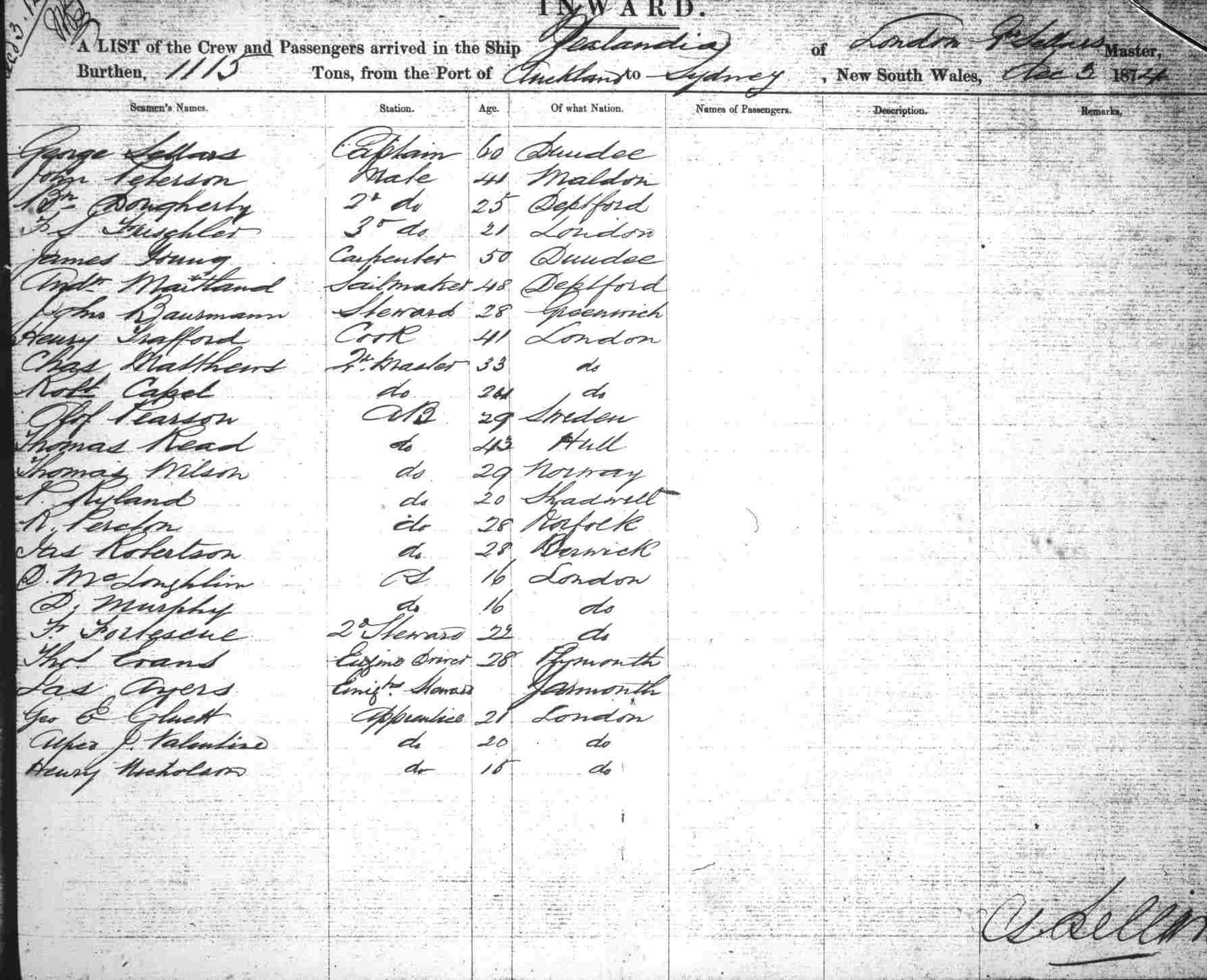
Departed Auckland, New Zealand for London via Sydney, arrived Sydney, Australia on the 3rd of December 1874. The Zealandia was planned to head for Dunedin, but Captain Sellars had word from the owners to alter destination and make for Sydney, Australia. It is not yet known what cargo she took from Australia.
1875 The Ship Zealandia
Departed London, England on July 17th 1875, arrived Port Chalmers, New Zealand on October 27th 1875.
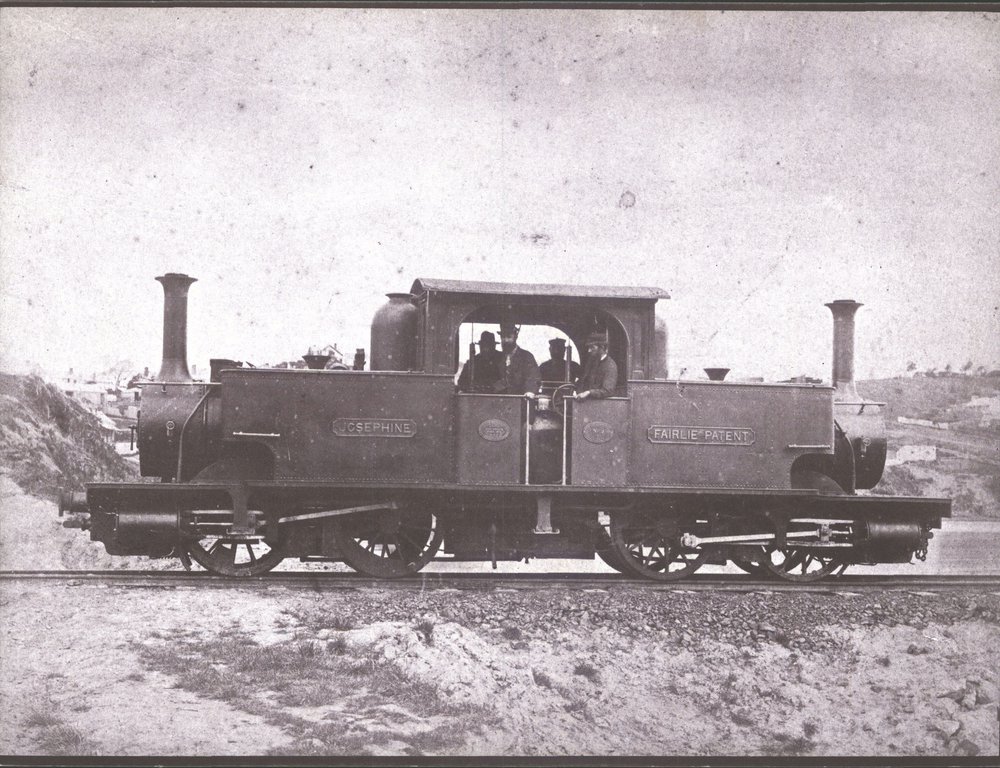
The ship had a good voyage, did however sight icebergs in latitude 43 south. Landed 189 passengers with only one death Daniel Gabbins from a inflammation of the brain, also had a birth a girl for Mrs Harvey. Cargo included two Fairlie Railway Engines weighing 10 tonnes for the Tokomairiro and Lawrence Railway, for working the Tuapeka Branch Line. The Tuapeka, became Lawrence then finally the Roxburgh Branch Line and was a large civil project with final completion not until 1928. It was first built to serve the settlement of Lawrence and the gold mines in the area, it was eventually extended to Roxburgh.
Departed Port Chalmers, New Zealand and sailed for London, England on the 24th of January 1876. Cargo included 5000 bales of wool, tallow and leather with a combined value of £100,000. Alfred Smith a local deckhand died handling the cargo, his body being crushed between two horse drawn trucks on the Docks.
1876 The Ship Zealandia
Departed London, England on June 16th, 1876, arrived Wellington, New Zealand on September 18th, 1876.
Arrived after a uneventful passage with 32 passengers and a large amount of general cargo, including a large amount of painting, both watercolors and oils from artists such as Myles Birket Foster and David Roberts RA. Also shipped the new Cook Straight Telegraph Cable, about 80 miles length of cable. In the late Victorian era Myles works was used by Cadbury’s for the decorations on their chocolate boxes, on his death in 1899 he was referred as one of the most popular Water Colourist of all time.
Departed Wellington, New Zealand on the 12th of December, 1876 for London, England. Cargo included about 4,773 bales of wool and other cargo and a small number of passengers.

1877 The Ship Zealandia
Departed London, England on the 6th of June 1877 , arrived 26th of October, 1877 to Wellington, New Zealand.
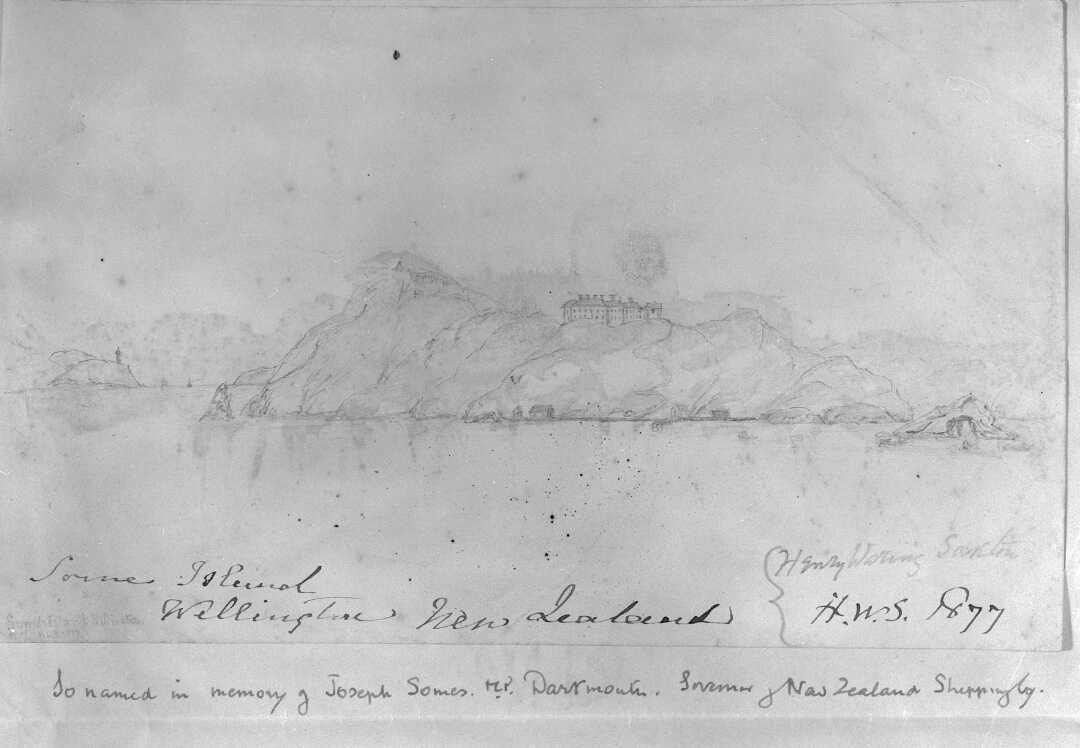
On the 7th of July, 1877 while in the Atlantic at latitude 21°N the Zealandia collided with the Ellen Lamb and cut her in two. The Ellen Lamb sunk within a few minutes however 12 crew members were able to be recused, the rest of the crew including the master drowned. The Zealandia was herself badly damaged and taking on water made for nearest port which was Rio de Janerio, Brazil about 2,000 miles away. The Zealandia made port and stayed for several weeks repairing the hull, job-boom, fore-top-mast and fore top-gallant-mast which had all been lost in the collision. A passenger on the Zealandia Mr F Barraud wrote a letter to father giving a account of the events, in it he wrote: “On the 7th, we were in company with several vessels the Ship Niagara and the Barque Ellen Lamb, 37 days out from Liverpool bound for Callo with coal. At about 10:30 pm we heard a call a light on the port bow then hard a-port! Then almost immediately we smashed into the Ellen Lamb just before her foremast cutting her in two. The Captain, Carpenter, a Seaman and a Ship-Boy drowned, The fault was entirely with the Captain of the Ellen Lamb, who reversed the Chief Mate at the Helm who had put it hard to port, but it was to late to clear us. We were on the port tack and they to starboard, so they should have got out of the way. Her foremast landed over us carrying away all our jibs, fore-royal, mast and yard and leaving a large hole in the stern big enough for a man to enter, fortunately it hit a watertight compartment and just at the waterline. Two of the Zealandia crew were in the compartment and injured however they managed to block the hole with wood, sacks and tar. All the passengers helped with repairs and manning the pumps, and you could imagine the fear at the thought of how many passengers could fit in the boats, the highest praise should be made to all the crew and young male passengers who exerted themselves at the pump.” Another passenger George Grant recounted “I retired about 10 pm and had slept an hour when Mr Sproule awakened us with the cry “we are run down”. Catching hold of the front of my bunk to stand the shock and a moment’s silent prayer I jumped and while putting on my trousers. Crash! Went the ships. Running on deck I saw a mast tossing in the air and a shout of “she’s going down” caused a great consternation not knowing which vessel it was, however in a few seconds the other vessel sank and after a moment’s silence the creaking of splinters, the shouts of the officers and the noise of the sea gave forth a hideous sound. Hearing an appeal for help I assisted in pulling in the sails meantime the port lifeboat had been lowered to try and rescue the crew of the sank vessel, the baker was found cowering in the bottom of it. She succeeded in picking one man out of the water. It was now found that four lives had been lost. Both passengers and crew of the Zealandiaexercised great self-control and did their work well. It turned out we had received a severe shock, breaking one of the plates at the bow, our jib & fore rigging had been carried away and the ship loosened at the stern. The hole was temporarily plugged and the Captain recommended the passengers to retire assuring them all immediate danger was past. We all lay down about 2 am but not to sleep. The next day was the Sabbath and we got up about 6 am and a very woeful appearance our vessel presented with her sails all closely furled and floating like a log in the water. All hands busy repairing the damage done last night and a few men would or could have wrought better, especially Mr Joplin, the Chief Mate and Mr Alford, the Carpenter. Several vessels came close to see if we wanted assistance. A great many sharks swimming about the ship all day.” When the ship finally arrived into Wellington it was found that several crew and passengers had contacted Smallpox while in Rio, with two Seaman dying from the disease. The ship remained in quarantine in behind Soames Island in Wellington for several weeks, no doctor was on board due to passenger numbers being unassisted and less then 50. The ship was released and berthed in Wellington 15th of November. The ship had carried about 50 passengers and a large amount of cargo including pipes for the city water works. When in harbour during New Years, Captain Sellars had a tradition of raising all the flags and setting off Ship Rockets, much to the local inhabitants delight, however on a previous voyage a Ships Rocket set off during New Years celebrations by the first mate had hit a child. Captain Sellars was instructed to pay £50 compensation, that was the last time he released Rockets for New Year.
Departed for Wellington, New Zealand for London, England on the 2nd of January 1878. The Zealandia departed with over 5200 bales of wool, and skins and tallow total value over £100000.
1878 The Ship Zealandia
Departed London, England on May 30th, 1878, arrived Wellington, New Zealand on August 28th, 1878.
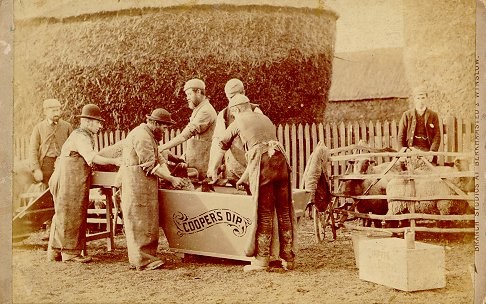
Arrived with general cargo and 46 passengers had good passage except one gale which carried away a sail. Cargo included several pure breed English terrier dogs valued at £10 each and 25 cases of Cooper Sheep dip. Wool was fast becoming the major New Zealand export, but New Zealand’s stock was being threatened by diseases accidentally brought in from Australia. The NZ Government introduced the 1878 Sheep Act to protect the wool export industry and eradicate the disease, farmers could be fined for having sheep that were scabby in their flocks, Sheep Dip was invented by William Cooper in 1851 in England and this was one of the earliest shipments to New Zealand.
Departed Wellington, New Zealand on the 12th of December 1878 for London, England. Sellars had difficulty recruiting seaman having to offer £8 per month to entice crews, even this proved difficult, eventually enough men could be recruited and the ship could depart. The Zealandia departed with a full load of bales of wool.
1879 The Ship Zealandia
Departed London, England on July 7th, 1879, arrived Wellington, New Zealand on October 19th, 1879.
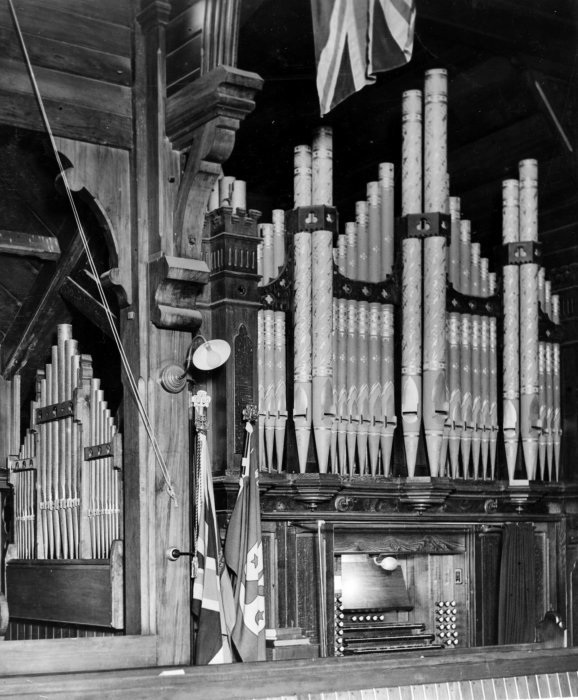
Sailed first to Plymouth, England and took on board 346 government assisted passengers, then departed on the 17th of July to continue her voyage. The journey was uneventful, but there was several cases of Small Pox and on arrival in Wellington the ship took a day to clear the Government Health inspections. There was much anger in Wellington at the time of more immigrants arriving, unemployment levels in the city was high at that time, in The Evening Standard it was expressed as “More unemployed to arrive from there friend of the working man Sir Grey.” However the regions helped with placements, 35 of the immigrants left for Whanganui and 10 for New Plymouth, and the rest transshipped and moved further afield. General cargo shipped also included a organ for St Marks Church in Wellington This pipe organ was built by Halmshaw of Birmingham in 1879. Two seaman William and Denis Sullivan were sentenced to Gaol for being absent from the ship and refusing duty.
Departed Wellington, New Zealand for London, England on the 16th of January 1880. Carried a large cargo of wool, total valve about £71,392.
1880 The Ship Zealandia
Departed London, England on July 20th 1880, arrived Port Chalmers, New Zealand on October 21st, 1880.
The Zealandia made good voyage and carried about 1513 tonnes of cargo and 35 passengers, cargo included a large amount of iron 775 bars. On arrival she was towed into harbour by the SS Plucky. Half the cargo was dead-weight and making the voyage not very profitable.
Departed Port Chalmers, New Zealand on the 8th of December, 1880 for London, England. Cargo loaded included 37 casks of tallow, 3600 bags of wheat, 3600 bags wool, 82 bags skins and other cargo including bones, horns and sundries.
1881 The Ship Zealandia
Departed London. England on the 27th of June 1881, arrived Auckland, New Zealand on September 28th, 1881.
Had a voyage without incident and without sickness or death onboard, although had one birth to a Mrs Verrier. General cargo included a large shipment of pianos both upright and grand and a large number of settlers for Grant and Fosters special settlement in Te Aroha. Emigrants were sought from temperance farmers and farm laborers from the Lincolnshire region and given half the fare of passage and assistance on arriving. At the time the area had a gold rush and with a large number of hard drinking miners in the area, the new immigrants welcome was less then warm.
Departed Auckland, New Zealand on the 25th of October for Port Chalmers and arrived November 5th, 1881, then sailed for London England, on December 31st. Loaded with 3271 bales of wool but waited for a large shipment of wheat to be ready for transportation, carried 1500 bags of wheat and 1102 of flour.
1882 The Ship Zealandia
Departed London, England on July 9th, 1882, arrived Port Chalmers, New Zealand on October 10th, 1882.
On this voyage the Zealandia experienced several gales in the southern ocean, which caused damage to the ship, including the lost poop ladders, part of her bulwarks, forcastle and head rails, her saloon was staved in and the seaman’s and passenger quarters were washed out from the forcastle. Many of the crew lost there chests. Captain Sellars remarking that they were the two heaviest gales he has seen in the southern seas and except the hurricanes in the bay of Bengal the worse he has ever experienced. The ship carried 22 passengers and general cargo including a dredge for the habour. On the 5th of January a furious gale hit the harbour, the ship broke from her moorings after a shackle broke from a buoy, thankfully only causing slight damage.
Departed Port Chalmers, New Zealand on the 9th of January, 1883 for London, England. Loaded a cargo of wool and grain valued at £97,000, This was Captain Sellars last voyage.

 THE SHIP BOMBAY!
Leave a comment